On October 12th, a Camas homeowner realized that their property’s heavy clay soil meant their standard gravity drainfield was no longer compliant with Washington Administrative Code 246-272A. It is a common realization in Southwest Washington, where the diverse terrain of Clark County demands more than a one size fits all approach to wastewater. You likely view your septic system as a vital investment in your home’s health, but the technical jargon and fear of high replacement costs can make the management process feel daunting. We understand that homeowners value professional certainty over guesswork when it comes to environmental safety.
This guide simplifies the various types of septic systems found in our region, from traditional gravity setups to advanced aerobic treatment units. You’ll discover how specific soil conditions in Vancouver determine which design is necessary for your land and how to ensure your system remains within state environmental guidelines. We provide a clear path to identifying your current setup and connecting with certified local inspectors who prioritize technical precision and long term property safety. By the end of this article, you will have the expert knowledge needed to manage your property’s infrastructure with total confidence.
Key Takeaways
- Understand the fundamental differences between gravity-based and engineered solutions common in Clark County to ensure your property meets local standards.
- Identify which specific types of septic systems are required by the Washington Department of Health when dealing with shallow or saturated soil conditions.
- Discover how your property’s unique terrain and proximity to local water bodies like Lackamas Lake dictate the necessary layers of wastewater treatment.
- Learn professional strategies to protect your investment from regional environmental threats, specifically invasive Douglas Fir and Maple root systems.
- Gain the technical clarity needed to select a system that provides long-term stability and operational safety for your Southwest Washington home.
Common Septic System Types in Vancouver and SW Washington
Septic systems function as underground wastewater treatment structures for properties located outside the reach of municipal sewer lines. A septic system is a multi-stage treatment process involving a tank and a drainfield. In Clark County, Washington, the local geography and soil composition dictate which specific types of septic systems are permissible for a parcel. These Onsite sewage facilities must meet strict regulatory standards to protect local groundwater and ensure long-term property safety.
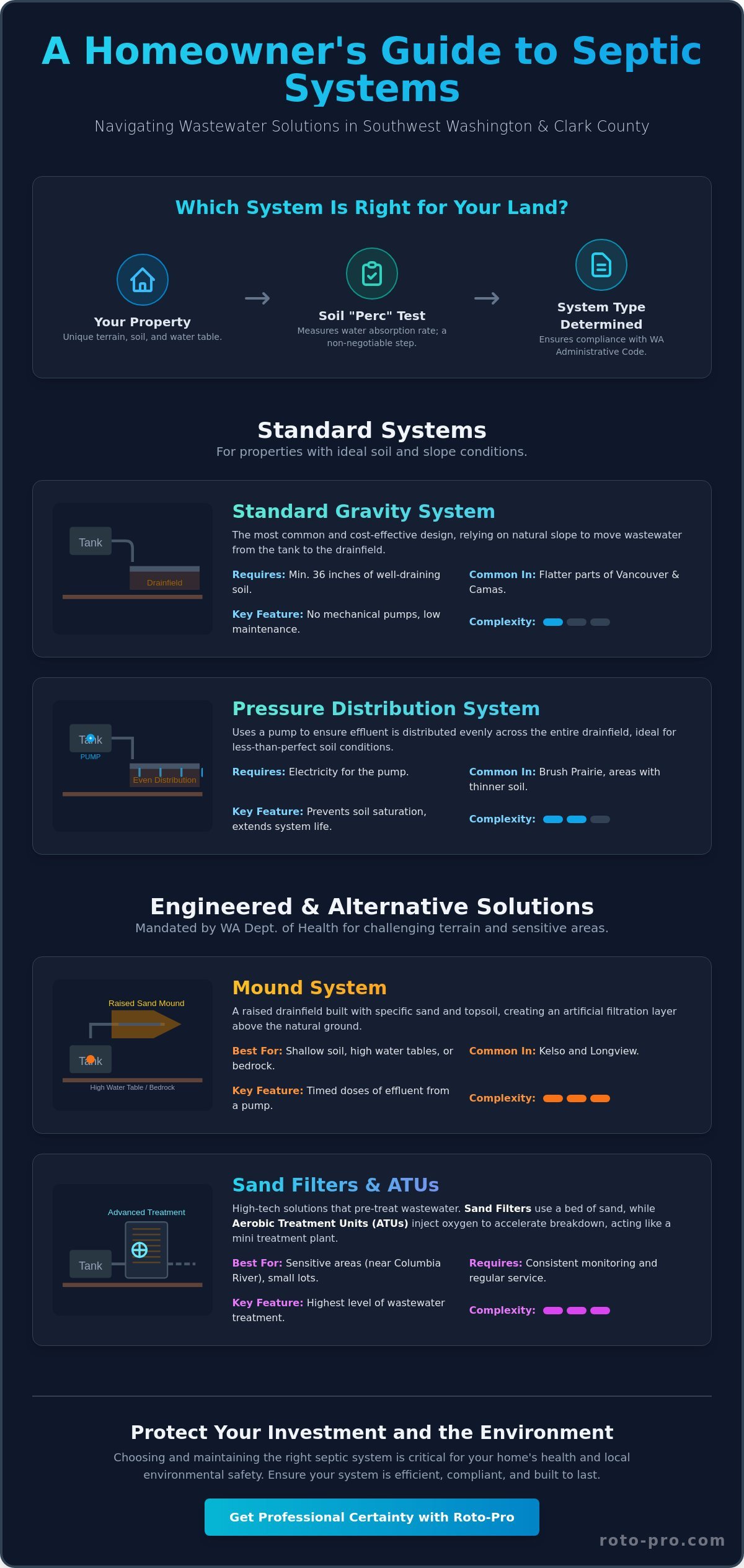
A professional soil percolation test, commonly known as a “Perc Test,” is the first step in any installation. It measures the exact rate at which water moves through your property’s soil layers. This data is non-negotiable; it determines if you can legally install a gravity system or if you need an engineered alternative. In SW Washington, systems are categorized as either Gravity or Alternative/Engineered solutions based on these technical results.
The Standard Gravity Septic System
The gravity system is the most cost-effective and simple design available. It relies on natural slopes to move liquid from the tank to the soil without the need for mechanical pumps. This setup requires at least 36 inches of well-draining soil, a condition frequently met in the flatter residential parts of Vancouver and Camas. It consists of a watertight tank where solids settle, followed by a series of gravel-filled trenches in the drainfield for final biological filtration.
Pressure Distribution Systems
Properties with thinner soil layers or the uneven terrain common in Brush Prairie require a more precise approach. Pressure distribution systems use a pump to distribute effluent evenly across the entire drainfield at specific intervals. This prevents the saturation often seen in gravity systems when one area receives too much liquid. It’s a technical solution that ensures stability for homes on challenging lots, making it one of the more reliable types of septic systems for modern SW Washington developments. The pump ensures every square inch of the drainfield contributes to the treatment process, extending the life of the infrastructure.
Engineered Solutions for Challenging Washington Terrain
In Clark County, the local geography often dictates the technology required for waste management. When native soil lacks the depth to filter bacteria naturally, the Washington Department of Health mandates the use of “Alternative” systems. These setups add specific treatment stages to protect local aquifers and groundwater. While the EPA describes several common types of septic systems, Pacific Northwest homeowners primarily rely on sand filters and mounds to manage difficult site conditions. These engineered solutions demand technical precision during both installation and operation. Neglecting the service schedule on these complex units often leads to premature component failure and the need for professional septic repair.
Mound Septic Systems
A mound system is a raised drainfield built with layers of high-quality sand and topsoil. It’s designed to treat wastewater when the natural soil layer is too thin to provide adequate filtration. These systems are frequently installed throughout Kelso and Longview where high water tables or shallow bedrock are prevalent. A pump inside the tank sends effluent to the mound in timed doses, which ensures the sand media isn’t saturated and can process waste effectively. For a detailed technical breakdown of this specific design, see our guide on what is a mound system.
Sand Filter and Aerobic Treatment Units (ATUs)
Sand filters use a watertight box filled with graded sand to pre-treat effluent before it reaches the soil. This extra step is vital for environmentally sensitive areas or properties with limited space. Aerobic Treatment Units, or ATUs, take this process a step further by acting like a small-scale municipal treatment facility. They inject oxygen into the wastewater to support aerobic bacteria, which break down solids much faster than traditional anaerobic processes. These units are highly effective for homes near the Columbia River where water quality protection is a top priority. Because these types of septic systems rely on mechanical aerators and pumps, they require consistent monitoring to ensure long-term reliability. If your system isn’t performing at peak efficiency, contact our team for a professional diagnostic review.
Choosing and Maintaining Your Clark County Septic System
Selecting the right setup involves more than just picking a model from a catalog. In Clark County, your property’s specific geography dictates which types of septic systems are viable. If you live near Lacamas Lake or other local water bodies, environmental protections are stricter to prevent nutrient runoff. Understanding the different types of septic systems ensures your home remains compliant with local health codes while protecting the surrounding ecosystem.
Factors Influencing Your System Choice
Soil composition varies significantly across SW Washington. Residents in Battle Ground often deal with heavy, clay-rich soils that drain slowly, while other areas near the Columbia River feature sandy deposits. This difference determines if you can use a standard gravity system or if you require an engineered solution. Sloped lots are common in our region and often require extensive site work and heavy excavation to ensure effluent doesn’t pool or surface prematurely. You can find detailed technical requirements for septic systems in Washington through the Department of Health guidelines.
Maintenance Tips for Longevity
The Pacific Northwest landscape presents unique biological challenges for underground infrastructure. Douglas Fir and Maple roots are notoriously aggressive in their search for moisture. These roots can penetrate joints, crush pipes, or completely clog a distribution box, leading to total drainfield failure. We recommend regular septic pumping and professional hydro jetting vancouver wa services to clear out grease and mineral scale before they harden into permanent blockages.
Follow these essential rules to protect your investment:
- Avoid compaction: Never park vehicles or heavy equipment on your drainfield. Compacted soil cannot “breathe” or filter effluent effectively.
- Manage water load: Use water-efficient fixtures to avoid over-saturating the system. This is critical during heavy WA rain seasons when the ground is already at its absorption limit.
- Stay compliant: Clark County regulations require professional inspections every 1 to 3 years, depending on your specific system type. Working with a qualified septic contractor who understands local WAC 246-272A requirements ensures your system meets the latest code standards before the annual certification deadline.
Proper care prevents the need for premature, costly replacements. If you’re unsure about the current state of your pipes or need a professional evaluation, Contact Roto Pro for expert septic services today. Our team provides the technical precision required to keep your system running at factory-level efficiency for decades.
Protect Your Clark County Investment with Professional Septic Care
Selecting the right infrastructure for your property depends on a clear understanding of Clark County’s specific soil conditions and topography. While gravity setups are common, the diverse terrain of SW Washington frequently requires engineered types of septic systems to comply with local health department standards. Adhering to a consistent 3 to 5 year maintenance cycle ensures your system reaches its full 30 year functional lifespan without unexpected failures.
Schedule a Septic Inspection with Roto Pro to verify your system’s performance and secure your home’s future. You’ll find peace of mind knowing your property is in expert hands.
Frequently Asked Questions
How do I know what type of septic system I have?
You can identify your system by requesting the “As-Built” drawing from the Clark County Public Health online database. This official document shows the exact layout and specific components installed during the original construction. If records aren’t available, look for a control box or green plastic risers in your yard. A professional technician can confirm the configuration during a 60 minute site inspection.
Why is a mound system required on my property instead of a gravity system?
A mound system is mandatory when your property has less than 18 inches of permeable soil before reaching a restrictive layer like bedrock or groundwater. Gravity systems require a minimum of 3 feet of vertical separation to treat waste safely. Since several Clark County regions feature dense clay or high water tables, these elevated structures provide the necessary filtration. It’s one of the most reliable types of septic systems for difficult terrain.
Do engineered septic systems require more frequent pumping?
Engineered systems don’t necessarily need more frequent pumping, but they do require annual professional monitoring. Washington Administrative Code 246-272A requires inspections every 12 months for systems with mechanical parts or proprietary treatment components. While a standard tank is typically pumped every 3 to 5 years with a professional septic pumping schedule, the pumps and sensors in an engineered system need regular calibration to prevent mechanical failure.
Can I switch from one type of septic system to another?
You can switch systems only if a licensed designer proves the new configuration meets current environmental and soil standards. You can’t move from a pressure system back to a gravity system if your soil depth is under 36 inches. Any modification requires a formal permit and a site evaluation by a certified septic contractor familiar with Clark County permitting requirements. Choosing between various types of septic systems depends entirely on the technical data gathered from your specific lot.