On a cold Tuesday evening in January 2026, a Vancouver homeowner returned home to find two inches of standing water in their basement caused by a sudden burst water pipe. It’s a situation where every minute counts. You realize that immediate action is the only way to prevent permanent structural damage and the rapid onset of mold. The stress of searching for a hidden shut-off valve while watching your property value diminish is a burden no resident should carry alone. We know that a plumbing emergency requires a calm, technical response rather than a temporary fix.
This article provides the exact sequence of steps to isolate the leak, document the damage for your insurance provider, and restore your home to its original condition. You’ll learn how to identify the mechanical cause of the failure and how to secure a certified local expert who prioritizes factory-standard repairs over quick patches. We begin with the critical first 60 seconds of your emergency response to ensure your home remains safe, dry, and structurally sound.
Key Takeaways
- Master the essential two-step response to stop active flooding and protect your property’s structural integrity.
- Identify how Pacific Northwest temperature fluctuations and aging pipe materials contribute to a sudden burst water pipe.
- Recognize the early warning signs of high water pressure and deteriorating plumbing before an emergency strikes.
- Distinguish between minor temporary fixes and the specialized technical solutions required for a permanent, professional repair.
- Understand the professional restoration process to ensure your home’s plumbing is returned to peak operational condition.
Immediate Response: What to Do When a Pipe Bursts in Your Home
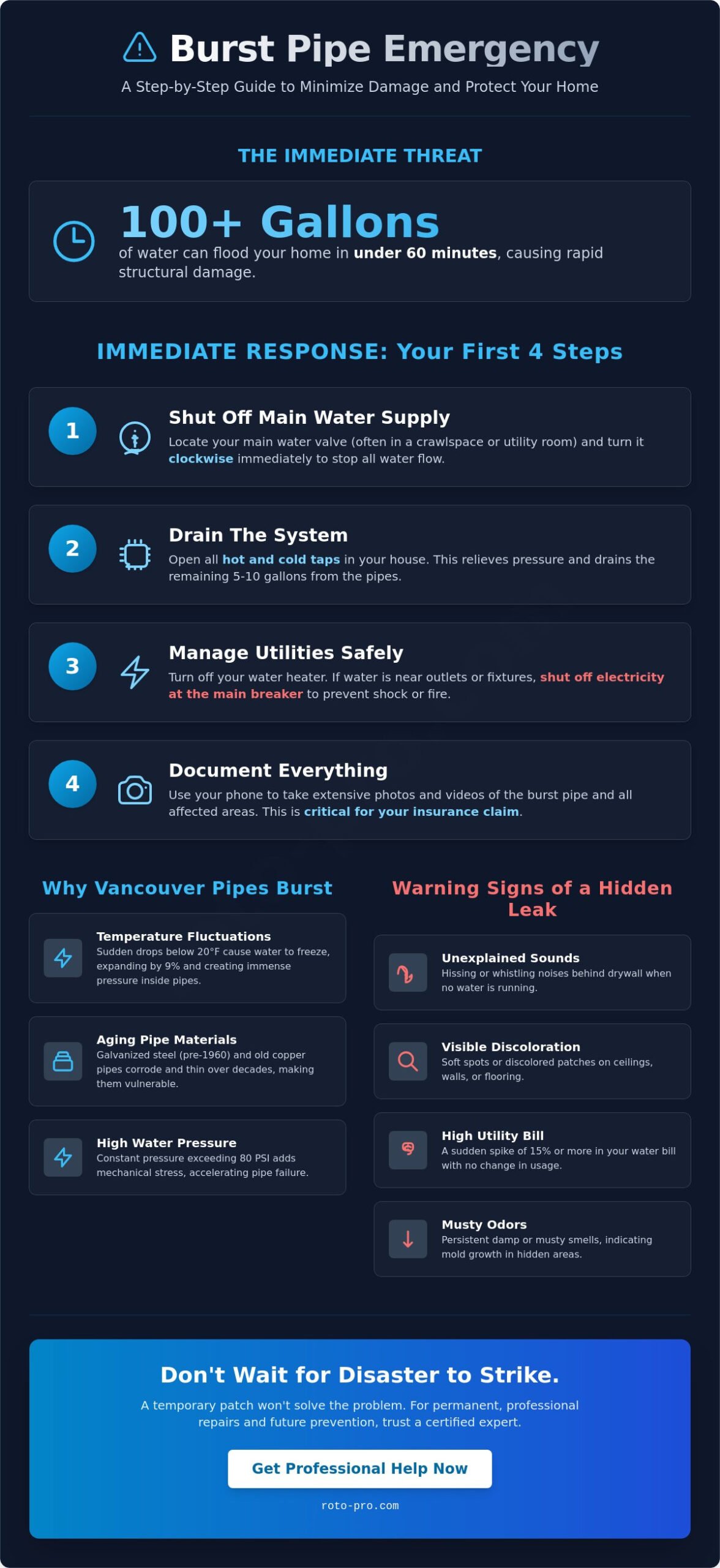
A burst water pipe can release more than 100 gallons of water in less than 60 minutes, leading to rapid structural degradation. Taking immediate, calculated action is the only way to minimize the consequences of water damage and protect your property’s long-term value. Follow these four professional steps to stabilize the situation before help arrives:
- Step 1: Shut off the main water supply. Locate your main valve and turn it clockwise immediately to stop the pressurized flow into your home.
- Step 2: Drain the system. Open every hot and cold water tap in the house. This relieves built-up pressure and empties the remaining 5 to 10 gallons of water still sitting in your pipes.
- Step 3: Manage utilities. Turn off your water heater to prevent the heating elements from burning out. If water is anywhere near outlets or light fixtures, shut off the electricity at the main breaker panel.
- Step 4: Document everything. Use your phone to take high-resolution photos and video of the burst water pipe and all affected areas. This evidence is vital for insurance claims filed in 2026.
Locating Your Main Water Shut-off Valve in Clark County
In most Vancouver homes built after 1980, you’ll find the shut-off valve in the crawlspace entrance or the utility room near the water heater. Older residences may have the valve located in a street-side curb box, which requires a specific meter key to operate. The main shut-off is the primary gatekeeper of your home’s pressurized water system. If you see a lever, it’s a ball valve; pull it 90 degrees until it’s perpendicular to the pipe. If it’s a round wheel, it’s a gate valve; turn it clockwise until it stops completely.
Safety First: Managing Electricity and Standing Water
Don’t step into standing water if you hear humming sounds or see flickering lights. These are clear indicators of electrical grounding. If water drips through a ceiling light fixture, the risk of fire or shock is critical. Always wear rubber-soled boots and avoid touching any metal surfaces or the electrical service panel if the floor is damp. Professional precision is required to ensure the site is safe before cleanup begins.
Identifying the Cause and Signs of a Burst Water Pipe
Vancouver’s climate presents unique challenges for residential plumbing. While mild winters are the norm, sudden temperature drops below 20°F followed by rapid thaws create the perfect conditions for a burst water pipe. When water freezes inside a line, it expands by approximately 9%. This expansion doesn’t just block flow; it creates massive internal pressure between the ice plug and the closed faucet. This hydraulic pressure eventually exceeds the structural integrity of the pipe material, leading to a violent failure once the ice thaws and water flow resumes.
Why Vancouver Winters Are Hard on Residential Plumbing
Local homes often feature uninsulated rim joists or outdoor hose bibs that remain vulnerable during Clark County cold snaps. Aging galvanized steel and copper pipes are particularly susceptible to these cycles. Galvanized pipes installed before 1960 often suffer from internal corrosion, while copper can thin over decades of use. High water pressure, often exceeding 80 PSI in certain Vancouver neighborhoods, adds mechanical stress that accelerates these failures. Understanding the best practices for preventing frozen pipes is essential for long term home maintenance and avoiding emergency repairs.
Subtle Signs You Have a Hidden Pipe Failure
A burst water pipe isn’t always a dramatic flood. A “pinhole leak” caused by pitting corrosion might only release a few gallons a day, whereas a catastrophic burst can discharge 100 gallons in minutes. Homeowners should stay alert for these indicators:
- Unexplained hissing or whistling sounds behind drywall.
- Discolored patches or “soft spots” on flooring and ceilings.
- A sudden 15% or higher spike in your Clark County utility bill without increased usage.
- Musty odors indicating mold growth in wall cavities.
You can verify a silent leak using your water meter. Turn off all faucets and appliances, then check the low-flow indicator, which is often a small red or blue triangle on the meter face. If it moves while the house is quiet, water is escaping your system. If you suspect a failure, a professional inspection can identify the exact breach point before it compromises your home’s structural integrity.
Professional Repair Solutions and Future Prevention
When a burst water pipe occurs, the difference between a temporary patch and a permanent fix determines the long-term safety of your home. While DIY clamps provide a momentary solution, they don’t address the structural weakness that caused the failure. Calling an emergency plumber vancouver wa ensures that the repair meets modern safety standards. Experts follow authoritative steps to take if your pipes burst, protecting your water heater and electrical systems from secondary damage.
A professional water line repair vancouver wa begins with non-invasive leak detection. Technicians remove the compromised section and verify the surrounding pipe integrity. If your plumbing system is over 40 years old or shows signs of systemic corrosion, whole house repiping offers a permanent resolution to chronic leaks. This process replaces outdated materials with modern alternatives that are less prone to temperature-related failures.
Modern Solutions: PEX Piping and Pressure Regulators
PEX piping is the preferred choice for the Pacific Northwest climate. Its flexibility allows it to expand during extreme cold, preventing the rigid fractures common in copper or galvanized steel. We also recommend installing a Pressure Reducing Valve (PRV). This device keeps incoming water pressure below 80 PSI, which prevents excessive wear on your home’s internal joints and fixtures. Maintaining stable pressure is a primary defense against a future burst water pipe.
Winterizing Your Home for 2026 and Beyond
Preparation for 2026 requires a checklist tailored to Clark County’s specific weather patterns. Homeowners should prioritize these steps before the first freeze:
- Disconnect and drain all outdoor garden hoses.
- Insulate exposed pipes in unheated crawl spaces and attics.
- Seal gaps in the foundation where freezing air might enter.
- Deploy smart leak detection systems for 24/7 monitoring and automatic shut-off.
Professional plumber vancouver wa services provide the only code-compliant permanent fix.
Secure Your Property Against Water Damage Today
Managing a burst water pipe demands a methodical approach to protect your home’s structural integrity. Start by closing the main water shut-off valve immediately to stop the flow. A standard 3/4 inch residential pipe can discharge approximately 10 gallons of water every minute, leading to rapid flooding. Recognizing early warning signs like unexplained moisture or fluctuating pressure helps prevent these emergencies. Professional intervention ensures that repairs meet 2026 technical standards rather than relying on temporary patches.
Roto Pro serves as a Licensed General Contractor in Washington, offering 24/7 Emergency Response for Clark County. Our expert excavation and water line specialists prioritize technical precision and long term reliability in every project. We focus on restoring your home’s safety through professional engineering and clean workmanship. You don’t have to face plumbing failures alone when expert help is a single call away.
Contact Roto Pro for 24/7 Emergency Pipe Repair in Vancouver
Taking the right steps now preserves your home’s comfort and value for years to come.
Frequently Asked Questions
How long does it take for a burst pipe to cause mold?
Mold colonies begin to form within 24 to 48 hours of initial water exposure. The Federal Emergency Management Agency (FEMA) states that spores thrive in moisture-rich environments common after a burst water pipe failure. If you don’t remove standing water and dehumidify the area within this 48 hour period, mold will likely penetrate porous materials like drywall. Professional extraction is the only reliable way to ensure long term safety and home comfort.
Does homeowners insurance in Washington cover burst pipes?
Standard homeowners insurance policies in Washington typically cover sudden and accidental damage from a burst water pipe. Data from the Washington State Office of the Insurance Commissioner indicates that while the resulting water damage is covered, the cost to repair the specific pipe isn’t always included. Coverage often depends on whether you maintained heat in the home during freezing weather. You should review your policy’s specific exclusions to confirm your level of protection.
Can I use a hair dryer to thaw a frozen pipe safely?
You can safely use a hair dryer to thaw a frozen pipe if you work slowly and keep the faucet open. The National Fire Protection Association reports that open flames cause 25 percent of winter fires, so electric heat sources are the professional choice. Start heating the pipe at the end nearest the faucet. This allows steam to escape safely. It’s a precise process that requires patience to avoid cracking the plumbing material or causing a leak.
What is the average cost of an emergency pipe repair in Vancouver?
Emergency plumbing repairs in Vancouver currently average between $200 and $600 for standard labor and service fees. According to 2024 industry reports from HomeAdvisor, specialized repairs involving main lines or structural access can reach $2,000 or more. These costs don’t include the restoration of water-damaged flooring or walls. Local rates fluctuate based on the 24 hour availability of licensed master plumbers and the specific technical requirements of the system failure.