What if the “quick fix” for your recurring clog is actually the reason you’re calling a plumber every few months? If you’ve been struggling with slow drains or the constant fear of a total sewer line failure, you aren’t alone. Many residents find that traditional snaking only pokes a hole through debris rather than removing it. When considering hydro jetting for drain lines camas wa, it’s important to understand that this technology offers a level of precision and cleanliness that mechanical augers simply cannot match. You deserve a solution that addresses the root cause of the blockage instead of just treating the symptoms.
We understand the stress that comes with potential infrastructure repairs, especially with the 2026 Washington State Department of Labor & Industries fee increases impacting the plumbing sector. In this guide, you’ll learn how to identify the specific signs of stubborn blockages and why high pressure water is the most effective way to restore total pipe flow. We’ll also walk through the technical verification process to ensure your pipes are structurally sound before any work begins. This logical approach provides the long term security and comfort your Camas home requires.
Key Takeaways
- Identify the early warning signs of drain failure, including gurgling toilets and recurring clogs caused by local Douglas Fir and Cedar root systems.
- Understand the technical difference between temporary snaking and hydro jetting for drain lines camas wa, which uses 4,000 PSI to scour pipe walls to a like-new state.
- Learn how a professional high-definition camera inspection maps blockages and confirms structural integrity before any pressure is applied.
- See how selecting specialized nozzles for specific debris types, such as grease or invasive roots, ensures a precise and permanent solution for your home.
- Discover how a proactive, technology-driven approach prevents the need for expensive sewer line replacements and restores long-term household comfort.
Troubleshooting Drain Line Failures in Camas, WA
Identifying a failing drain line early can prevent the catastrophic expense of a full sewer collapse. In Camas, homeowners often report gurgling toilets, slow-draining tubs, or recurring backups in basement floor drains. These aren’t merely inconveniences. They’re technical indicators of a system under stress. Understanding the complexities of modern plumbing systems requires a look at both the internal pipe condition and the external environment. When standard methods fail to clear these deep-seated obstructions, hydro jetting for drain lines camas wa becomes the necessary technical intervention to restore hydraulic capacity.
The local landscape presents unique challenges. Many older neighborhoods in Camas still rely on clay or cast iron pipes. These materials are particularly susceptible to the “Camas Factor.” Douglas Fir and Western Red Cedar trees, common throughout Clark County, possess aggressive root systems that target the seams of aging pipes in search of moisture. Once a root hair penetrates a joint, it expands, creating a dense mat that traps debris. Additionally, the steep slopes of Prune Hill affect drainage pressure. While gravity assists flow on the incline, sediment and heavy solids often settle at the transition points where the pipe levels out, leading to stubborn blockages.
Signs Your Clog is More Than a Simple Surface Blockage
When multiple fixtures back up simultaneously, it’s a clear signal that the issue lies within the main sewer lateral rather than a single branch line. You might also notice persistent sewage odors near your home’s foundation or damp patches in the yard during dry spells. Recurring clogs that reappear every few months typically indicate a persistent grease wall buildup along the pipe interior rather than a one-time obstruction from a single object. These signs suggest that the pipe’s internal diameter has been significantly reduced by years of accumulation.
Local Environmental Triggers for Camas Homeowners
Environmental variables in the Pacific Northwest accelerate pipe degradation. Heavy seasonal rainfall in Clark County puts immense pressure on aging sewer laterals through soil shifting and increased inflow. Furthermore, the presence of hard water in certain local wells leads to mineral scale accumulation inside residential pipes. Our assessment often reveals that hydro jetting for drain lines camas wa is the only method capable of scouring these mineral deposits without damaging the underlying structure.
Hydro Jetting vs. Snaking: Choosing the Right Solution
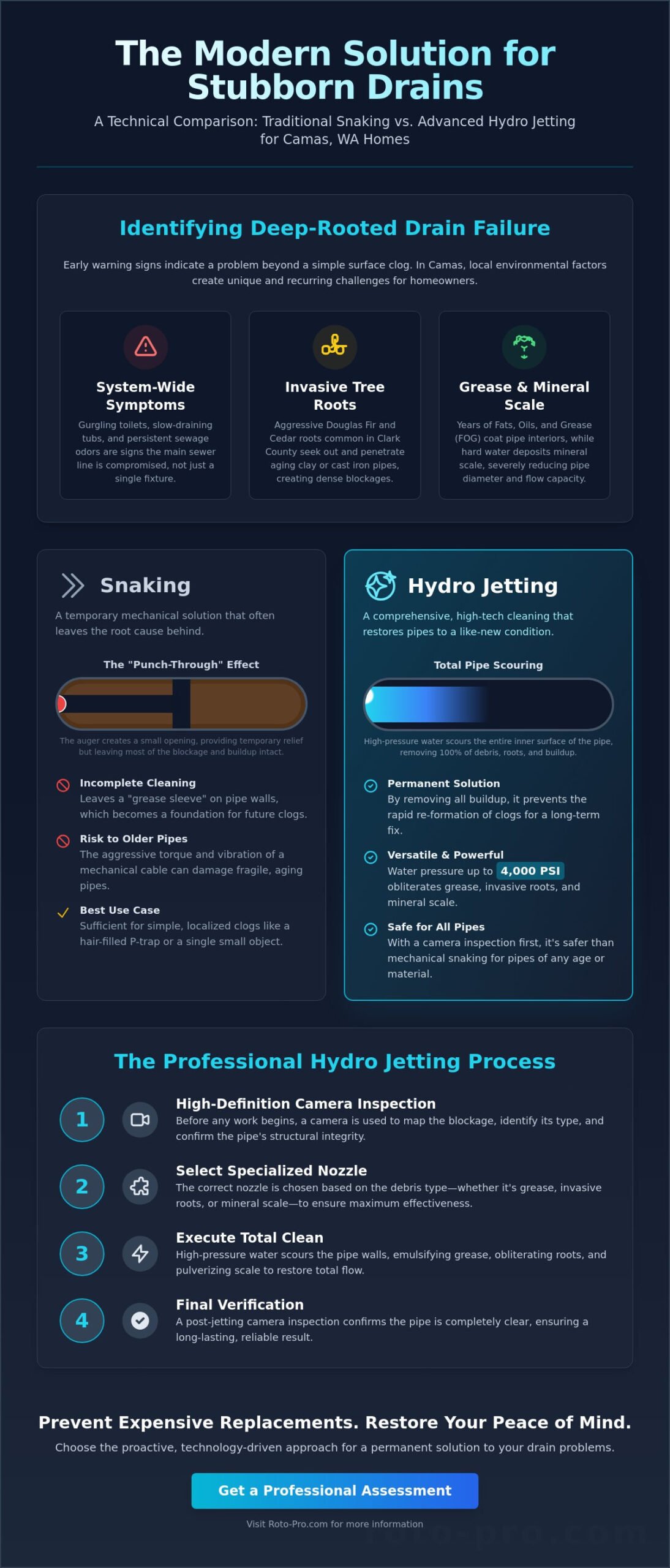
Choosing between mechanical snaking and hydro jetting for drain lines camas wa requires a technical understanding of how each method interacts with pipe debris. A drain snake uses a rotating cable with a blade to cut through obstructions. While effective for simple blocks, it often leaves a “grease sleeve” along the pipe walls. This residual layer of fats and oils acts as a foundation for new clogs. In contrast, hydro jetting utilizes water pressurized to 4,000 PSI. This force scours the interior surfaces to a like-new condition, removing the buildup that mechanical tools simply cannot reach.
Safety is a primary concern for homeowners with older infrastructure. Adhering to Hydro jetting safety standards ensures that high-pressure water is applied with precision. This method is often safer for fragile pipes than the aggressive torque and vibration of a mechanical cable. While the upfront cost of a rooter service is lower, the long-term savings of jetting are significant. It drastically reduces the frequency of service calls by providing a comprehensive clean rather than a temporary fix.
When Snaking is Sufficient (and When It Fails)
A drain snake remains a valid tool for localized issues, such as hair clogs in a bathroom sink or small object removals. However, it frequently suffers from the “punch-through” effect. The blade creates a small hole through the center of a blockage, providing temporary relief without addressing the total volume of the obstruction. This is especially true with the invasive tree roots common in Camas. A snake might trim them, but it won’t clear the joint entirely. For a more detailed breakdown of equipment capabilities, review our 2026 professional guide to clear drains.
The Total Clean: Why Camas Professionals Prefer Jetting
Camas professionals prioritize hydro jetting because it offers complete removal of fats, oils, and grease (FOG). This level of cleanliness is essential when preparing lines for expert sewer line repair in Clark County. By stripping the pipe walls of all biological growth and mineral scale, we can accurately assess the pipe’s structural integrity. If you’ve dealt with the same clog multiple times this year, a professional sewer line evaluation can confirm if a hydraulic clean is the right permanent solution for your home.
The Roto Pro Hydro Jetting Process for Camas Homes
Our approach to hydro jetting for drain lines camas wa follows a rigorous technical protocol to ensure your home’s infrastructure is protected. We begin with a high-definition sewer camera inspection. This step is critical; it allows us to map the exact location of the blockage and assess the pipe’s structural health before applying any hydraulic pressure. We adhere to industry standards for drain line maintenance, ensuring that our diagnosis is accurate and based on visual evidence rather than guesswork. This precision prevents unnecessary wear on aging pipes.
Once we’ve identified the obstruction, we select a specialized nozzle designed for the specific debris. A root-cutting head is used for invasive Douglas Fir roots, while a high-degree scouring nozzle is better for heavy grease accumulation. The cleaning process is systematic, moving from the cleanout point toward the city main or septic tank. After the jetting is complete, we perform a final camera verification. This second look ensures 100% flow restoration and confirms that the pipe interior has returned to its optimal state.
What Happens if the Camera Reveals a Break?
Sometimes, the initial inspection reveals a pipe that has already collapsed or suffered a severe fracture. In these cases, we transition from cleaning to technical repair or excavation. Because Roto Pro holds a general contractor license, we can manage the entire utility work process seamlessly. We handle everything from spot repairs to full line replacements, maintaining the same high standards of precision throughout the construction phase. You won’t need to coordinate with multiple vendors to restore your home’s functionality.
Long-Term Maintenance and Prevention
Camas properties with significant tree canopy often require preventative jetting every 18 to 24 months to stay ahead of root intrusion. Between professional cleanings, avoid disposing of fats and oils down the sink to prevent the grease buildup mentioned earlier. If you’re experiencing slow drainage, it’s better to act before a total backup occurs. Contact Roto Pro for a professional drain line assessment in Camas to ensure your plumbing system remains reliable and secure.
Restoring Your Home’s Hydraulic Integrity
Maintaining a healthy drainage system in the Pacific Northwest requires more than reactive fixes. As we’ve detailed, the combination of invasive roots and aging pipe materials creates a scenario where standard snaking often falls short. By choosing professional hydro jetting for drain lines camas wa, you’re investing in a comprehensive scouring process that removes 100% of debris and biological buildup. This technical approach preserves your pipes while restoring the total flow capacity your household depends on for daily comfort.
Roto Pro provides the long term security of a Licensed General Contractor and the precision of advanced video camera diagnostics. We focus on identifying the root cause of every malfunction to ensure your home remains structurally sound. Whether you require a preventative technical assessment or a 24/7 emergency response, our specialists are ready to provide a permanent solution. Schedule your Camas drain line inspection with Roto Pro today and regain the peace of mind that comes with a perfectly functioning plumbing system.
Frequently Asked Questions
Is hydro jetting safe for older clay or cast iron pipes in Camas?
Hydro jetting is safe for older clay or cast iron pipes provided a high-definition camera inspection confirms their structural integrity first. While these materials can become brittle over time, the non-invasive nature of pressurized water is often preferable to the aggressive vibration and torque of mechanical snakes. Our technicians carefully adjust the pressure settings to match the specific tolerance of your home’s infrastructure, ensuring a thorough clean without risking a pipe collapse.
How long does a typical hydro jetting service take for a residential line?
A standard residential service typically takes between 45 minutes and two hours to complete. This timeframe includes the initial diagnostic camera work, the setup of the hydraulic equipment, and the final verification scan. More complex blockages or difficult access points might extend the procedure slightly. We prioritize a methodical, logical approach over a rushed one to ensure the pipe’s interior is returned to its optimal state.
Can hydro jetting remove heavy tree roots from my sewer line?
Yes, hydro jetting for drain lines camas wa is exceptionally effective at removing heavy tree roots that have penetrated sewer seams. Specialized rotating nozzles act as hydraulic cutters, slicing through dense root mats and scouring the pipe walls clean. This process removes the entire obstruction, which prevents the rapid regrowth often seen after traditional snaking. It’s the most effective non-invasive method for restoring total flow to a root-compromised system.
What is the difference between a residential hydro jetter and a commercial-grade machine?
The primary difference lies in the water volume and pressure capacity. Residential machines are optimized for the four-inch pipes found in most homes, while commercial-grade equipment delivers higher gallons per minute to clear larger six-inch or eight-inch lines. Commercial systems also feature longer hose runs and specialized heads designed for the heavy grease loads typical of industrial environments. Both systems follow the same professional quality standards to ensure a precise, long-lasting result.