What if that rhythmic popcorn sound coming from your utility closet is actually the sound of your appliance slowly destroying itself from the inside out? For many homeowners, searching for a water heater making popping noise fix becomes an urgent priority when they realize the sound indicates “kettling.” This occurs when mineral sediment traps steam bubbles at the bottom of the tank, causing them to burst violently against the steel. You’re likely worried about a potential tank failure or the rising energy bills that follow decreased efficiency. It’s a valid concern, especially with new 2026 plumbing codes and DOE standards changing how we must maintain these essential systems.
We understand that you need a quiet home and a reliable hot water supply without the fear of a sudden equipment failure. This guide will help you identify the root cause of the noise and provide a clear, technical path to silence your tank while extending its operational life. You’ll learn how to properly address sediment buildup, navigate the latest safety standards, and determine if a simple maintenance routine is enough or if it’s time to consider a professional water heater replacement.
Key Takeaways
- Identify the physical cause of “kettling” and how trapped steam creates that distinct popcorn sound at the bottom of your tank.
- Follow a logical, step-by-step water heater making popping noise fix that utilizes standard household tools to restore system efficiency.
- Prioritize safety by mastering the cooling and pressure relief protocols necessary to prevent accidental scalding during the draining process.
- Recognize the specific indicators, such as weeping seams or hardened scale, that signal when a DIY flush is no longer sufficient.
- Understand how proactive maintenance preserves structural integrity and prevents the premature need for a full water heater replacement.
Why Your Water Heater is Making a Popping Noise
The popping sound you hear isn’t a mechanical failure of the burner or a ghost in the pipes. It’s physics. This noise is a physical reaction to mineral accumulation at the base of your tank. In regions like Clark County, the water supply often carries high concentrations of calcium and magnesium. Over several heating cycles, these minerals solidify and settle, creating a thick layer of “scale” on the bottom. When you understand How Water Heaters Work, you realize the burner is located directly beneath this floor.
This sediment layer acts as a thermal barrier. The burner must work much harder and stay on longer to heat the water through the sludge. This inefficiency directly increases your monthly utility bills and puts unnecessary stress on the tank’s structure. Finding a permanent water heater making popping noise fix starts with recognizing that this sound is actually steam escaping from beneath that mineral crust.
The Phenomenon of Kettling
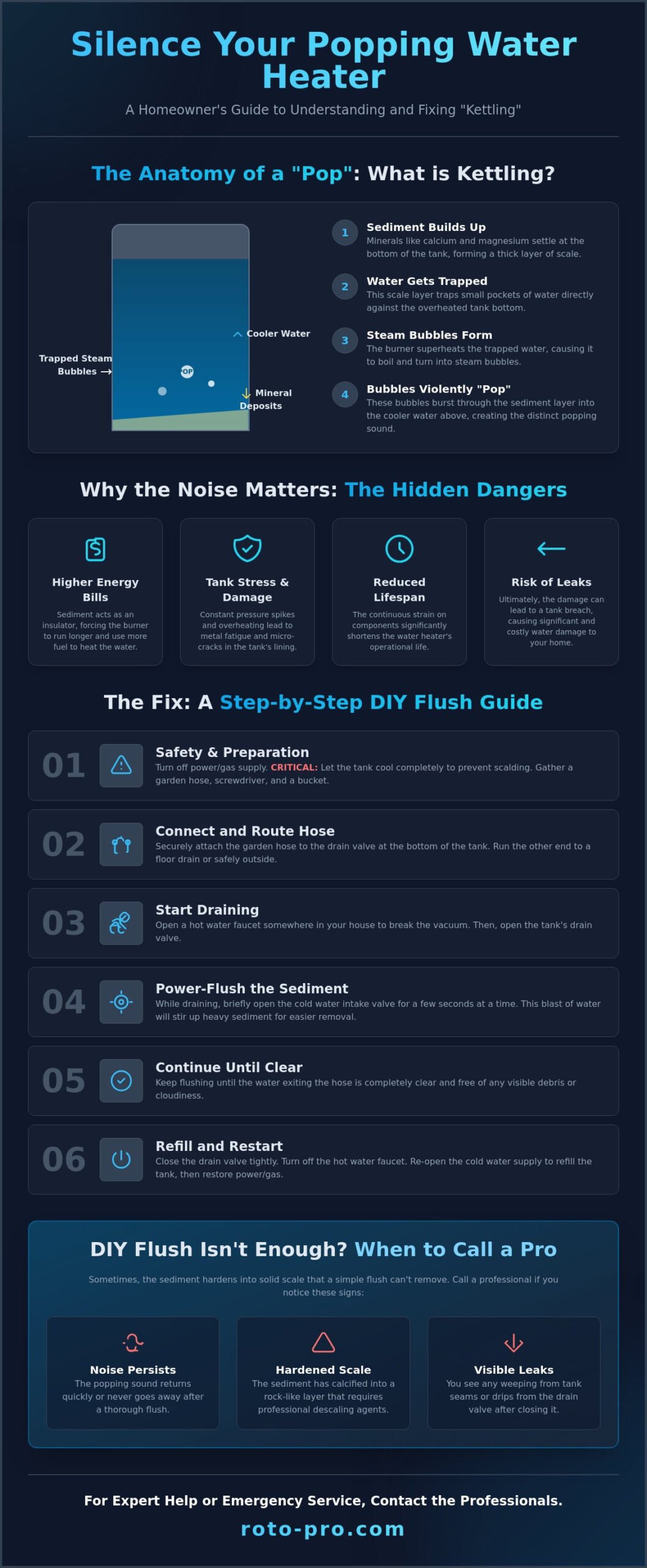
When a thick layer of sediment coats the bottom of the tank, it traps a small amount of water against the overheated metal surface. This water quickly reaches a boiling point, converting into steam bubbles. As these bubbles expand and force their way through the heavy sediment layer, they collapse and “pop” into the cooler water above. Kettling is the process where mineral deposits trap steam, creating localized pressure spikes. This constant agitation causes the tank bottom to overheat, which eventually leads to metal fatigue and microscopic cracks in the protective glass lining.
Is a Popping Water Heater Dangerous?
Homeowners often worry about a catastrophic tank explosion. While a popping noise is a serious warning sign, modern systems have safety protocols to prevent such events. Every unit is equipped with a Temperature and Pressure (T&P) relief valve. This component is designed to open and discharge water if internal pressure exceeds safe limits. However, if the popping persists, it indicates that your unit is operating under extreme stress. While an immediate explosion is rare, the ongoing pressure spikes and overheating can lead to a sudden tank breach, resulting in significant water damage to your home.
How to Fix the Popping Noise: A Step-by-Step Flush Guide
A successful water heater making popping noise fix requires a systematic approach to sediment removal. You’ll need a few basic tools: a standard garden hose, a flat-head screwdriver, and a large bucket to catch the initial runoff. Before beginning any work, you must allow the tank to cool. Attempting to drain a unit at full operating temperature risks severe scalding and can damage the internal components of the drain valve. Patience during this cooling phase ensures a safe and controlled maintenance process.
Phase 1: Shutting Down and Connecting
Safety is the priority. For gas units, turn the control knob to the “Pilot” or “Off” position. For electric models, switch off the dedicated breaker in your electrical panel. Attach your garden hose to the drain valve located at the base of the tank. Route the other end of the hose to a floor drain or a safe location outside. Ensure the hose stays below the level of the valve to maintain a steady gravitational flow. This preparation is essential for maintaining your water heater and protecting your home from accidental water damage.
Phase 2: Draining and Rinsing the Tank
Open a hot water faucet elsewhere in the house to break the vacuum; this allows the water to flow freely out of the tank. Open the drain valve with your screwdriver. To maximize effectiveness, use a “power-flush” technique. Briefly open the cold water intake valve while the tank is still draining. This sudden burst of pressure stirs up heavy mineral deposits that have settled at the bottom, making them easier to flush out.
Continue the process until the water exiting the hose is completely clear and free of debris. If the water remains cloudy or the noise persists after refilling, you may require an emergency plumber in Vancouver, WA to perform a professional descaling. Once the tank is clear, close the drain valve and check it carefully for any slow drips or leaks. A small leak at the valve can lead to significant corrosion over time, so ensure the seal is tight before restoring power or gas.
When a DIY Flush Isn’t Enough: Professional Solutions
While a step-by-step flushing guide is the standard first line of defense, it isn’t a universal cure for every system. Sometimes the sediment has transitioned from loose debris into a hardened, rock-like substance known as “scale.” Once this calcification occurs, a simple water heater making popping noise fix through a garden hose often fails because the deposits are too heavy to be moved by household water pressure. You should watch for specific signs of permanent structural damage, such as weeping seams at the tank’s base, persistent rusty water, or significantly slower recovery times between showers.
These symptoms suggest that the internal glass lining has likely reached its limit. If your unit is between 10 and 12 years old, the cost of ongoing maintenance and rising energy bills often makes a professional water heater installation in Vancouver, WA the most cost-effective long-term path. A new system ensures compliance with the latest 2026 efficiency standards and restores the quiet comfort of your home.
The Role of the Anode Rod
A professional diagnostic focuses heavily on the sacrificial anode rod. This magnesium or aluminum component is designed to attract corrosive elements to itself, effectively sacrificing its own metal to protect the steel tank. When this rod is fully depleted, corrosion accelerates and sediment formation increases rapidly. For homeowners in the Longview and Kelso areas, we recommend a 3-5 year inspection cycle for anode rods. Replacing a spent rod is a precise technical task that can prevent the premature failure of the entire tank.
Upgrading to Modern Efficiency
Homeowners tired of constant sediment issues often choose to upgrade to modern tankless systems. These units eliminate the storage tank entirely, removing the environment where mineral scale typically forms. If you notice slow drainage or backups while attempting to flush your heater, it may indicate broader plumbing concerns that require sewer line repair clark county. Addressing these systemic issues together ensures your entire home infrastructure operates at peak performance.
Securing Your Home’s Hot Water System
Restoring your appliance to peak efficiency requires more than just ignoring the sound; it demands technical attention to the mineral buildup within the tank. We’ve established that while a thorough flush serves as the primary water heater making popping noise fix, the age of the unit and the condition of the sacrificial anode rod are critical factors in determining its remaining lifespan. Addressing these issues now prevents the structural fatigue that leads to sudden tank failure and higher utility costs.
If your maintenance efforts don’t silence the kettling or if you discover signs of advanced corrosion, professional intervention ensures your home remains safe and comfortable. As a licensed and bonded general contractor serving Clark County since 2019, Roto Pro provides the technical precision needed to evaluate your system’s integrity. We offer 24/7 emergency plumbing support to address urgent failures before they cause extensive property damage.
Schedule a Professional Water Heater Inspection with Roto Pro to verify your unit’s safety and performance. Taking proactive steps today protects your investment and guarantees reliable hot water for years to come.
Frequently Asked Questions
Will my water heater explode if it’s making a popping noise?
An explosion is highly improbable because of the safety mechanisms built into modern tanks, specifically the Temperature and Pressure (T&P) relief valve. This valve is designed to release excess pressure before a catastrophic failure occurs. However, the popping noise indicates that the tank is under significant thermal stress. While you aren’t in immediate danger, ignoring the sound allows the sediment to continue damaging the internal glass lining, which eventually leads to a tank breach.
How much does it cost to have a professional flush a water heater?
Professional service fees for a water heater flush typically depend on the unit’s capacity and whether it is a standard tank or a tankless model. Larger tanks or high-efficiency tankless units often require more time and specialized equipment to clear hardened scale effectively. Homeowners should verify current rates with a licensed provider to ensure the service includes a full safety inspection of the anode rod and the relief valve to prevent future issues.
Can I use vinegar to remove sediment from my water heater?
Vinegar is an effective, non-toxic descaling agent, particularly for tankless units where scale buildup occurs on the heating elements. For standard tanks, a vinegar soak can help break down stubborn calcium deposits that a standard water heater making popping noise fix might miss. This process requires significant downtime to be effective. Professional plumbers often utilize specialized, food-grade descaling solutions to achieve more thorough results than household vinegar can provide on its own.
How often should I flush my water heater in Vancouver, WA?
Homeowners in Vancouver, WA, should ideally flush their systems once every twelve months to prevent mineral accumulation. If you have older pipes or live in an area with particularly hard water, a six-month cycle may be necessary to maintain peak efficiency. This regular maintenance is the most effective water heater making popping noise fix available. Consistent care also ensures your system remains compliant with the latest 2026 energy standards and plumbing codes.