The water heater with the lowest sticker price often becomes the most expensive appliance in your home before its first service cycle is even complete. When evaluating the electric water heater vs gas cost in 2026, many Clark County homeowners realize that initial savings are frequently offset by rising utility rates or complex infrastructure needs. It’s common to feel overwhelmed by the choice between a system that is affordable to install and one that is efficient to operate, especially when you fear choosing a model that might leave your family with a cold shower.
We believe in providing the technical precision you need to ensure long-term home comfort and financial stability. This guide breaks down the real-world math of 2026, including the impact of expired federal tax credits and the latest Department of Energy efficiency standards. You’ll gain a clear understanding of monthly utility impacts and the specific structural requirements for each unit. By the end, you’ll have the professional insight necessary to choose a system that fits your home’s existing footprint and your budget.
Key Takeaways
- Evaluate the true electric water heater vs gas cost by comparing lower initial purchase prices with long-term monthly utility impacts in the Pacific Northwest.
- Identify critical infrastructure requirements, such as specialized venting for gas models or necessary electrical panel upgrades for high-capacity electric units.
- Understand how the 2026 expiration of federal tax credits and new efficiency standards shift the payback period for high-performance models.
- Learn how professional maintenance, specifically monitoring the anode rod, can prevent premature tank failure and protect your long-term home comfort.
Upfront Purchase Price vs. Monthly Operating Costs
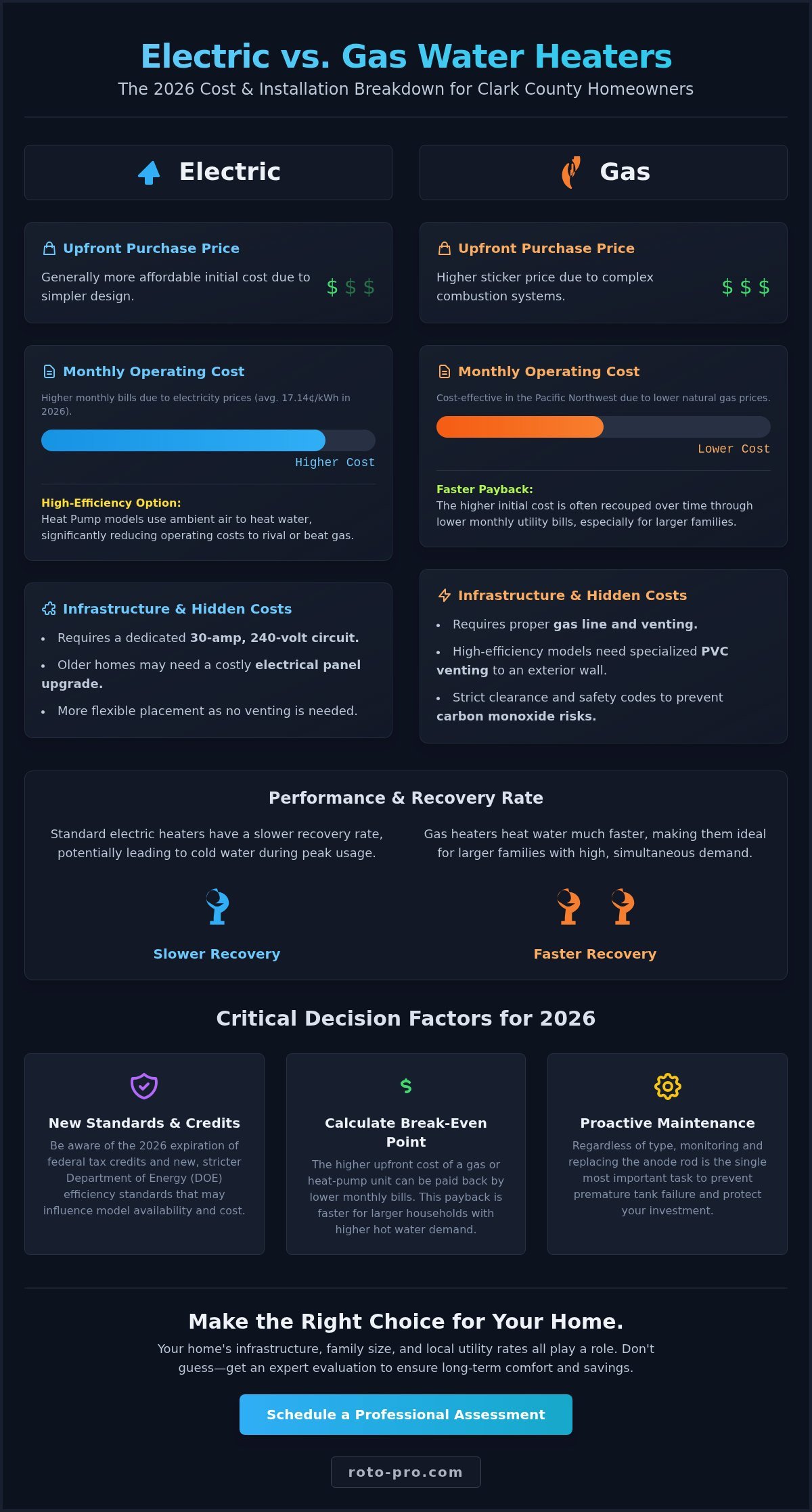
Standard electric tanks are generally the most affordable option at the point of sale. Their design is straightforward. They rely on internal heating elements rather than the complex combustion chambers and venting systems found in gas models. This lower entry price attracts many homeowners. However, the true electric water heater vs gas cost becomes apparent only after calculating the monthly energy consumption. Gas units often carry a higher sticker price due to their technical complexity, yet they typically offer a higher recovery rate. This means they heat a large volume of water much faster than standard electric tanks. For larger families, this speed might allow for a smaller, less expensive tank without risking a cold shower during peak hours.
Understanding storage water heater technology is vital for predicting performance. As of May 2026, national electricity prices average 17.14 cents per kWh. In contrast, natural gas prices remain relatively low. These figures mean that while you pay less at the store for an electric model, your monthly utility bill will likely be higher. Efficiency labels help bridge this gap. The Uniform Energy Factor (UEF) is the current industry standard for measuring efficiency. A higher UEF rating indicates a unit that converts more energy into hot water with less waste.
The Impact of Local Utility Rates
In Woodland and Kelso, your choice depends on current rates from Clark Public Utilities and NW Natural. Natural gas remains a cost-effective fuel for high-demand homes in the Pacific Northwest. High-efficiency heat pump water heaters are changing this dynamic. These units utilize ambient air to heat water. They significantly narrow the cost gap between fuel types, often operating for less than traditional gas models.
Calculating the Break-Even Point
The math of replacement involves more than just the unit price. A gas system might cost more initially. Lower monthly bills can eventually pay back that difference. This break-even point varies based on household size. A family of five will see a much faster return on a high-efficiency model than a single-person household. Your specific hot water demand dictates whether the upfront investment translates into genuine long-term savings.
Infrastructure and Hidden Installation Requirements
The physical environment of your utility closet often dictates the final electric water heater vs gas cost more than the price tag on the box. Switching fuel sources is rarely a simple swap. If you transition from gas to electric, you must account for the infrastructure required to support a high-draw appliance. This typically includes installing a dedicated 30-amp, 240-volt circuit. In older Clark County homes, this demand may exceed the current capacity of your service panel. Much like a whole house repiping project ensures your plumbing system is modern and safe, an electrical upgrade ensures your home can handle the increased load without risk of failure.
Gas units have their own structural demands. Atmospheric venting relies on a vertical chimney to pull exhaust out of the home. Modern high-efficiency condensing units, which meet the strict 2026 DOE standards, require specialized PVC venting through an exterior wall. These systems use a power vent to safely expel combustion gases. Proper drafting is a non-negotiable safety requirement to prevent carbon monoxide accumulation. You can find more details on these technical requirements in the Department of Energy water heater guide. If you’re unsure if your current setup meets code, scheduling a professional water heater installation in Vancouver, WA can clarify your options.
Gas Venting and Safety Compliance
Modern high-efficiency gas units prioritize safety through advanced combustion management. These units often require direct vent or power vent configurations. This means we must often run new PVC lines to the exterior of your home. This process requires precise sealing and slope to manage condensation. Skipping these steps can lead to moisture damage or hazardous gas leaks in your living space.
Electrical Capacity for High-Output Heating
Standard electric tanks require a significant amount of power to maintain water temperatures. We must verify that your home’s electrical panel has the available space and amperage. If your panel is already at its limit, adding a water heater could trigger a mandatory upgrade. This is a common hidden cost for homeowners moving away from gas fuel sources. We always recommend a thorough inspection of the existing wiring before selecting a new unit.
Space constraints also play a major role in the decision. Gas units require specific clearances for air intake and fire safety. Electric units are more flexible in tight spaces since they don’t involve open flames or exhaust heat. However, heat pump models need a specific volume of air to operate efficiently. These technical details ensure your system runs safely for its entire lifespan.
Long-Term Reliability and Maintenance Costs
The lifespan of a standard storage tank typically ranges from 10 to 15 years. This timeline remains consistent regardless of whether you choose gas or electric. The primary factor in determining longevity is not the fuel source, but the consistency of the maintenance performed. A critical element of this care is the sacrificial anode rod. This component, which costs approximately $50, attracts corrosive elements in the water to protect the steel tank. Neglecting to replace a spent anode rod is the leading cause of premature tank failure, often resulting in a replacement cost exceeding $2,000.
When comparing the electric water heater vs gas cost over time, you must consider repair complexity. Gas units utilize burners, gas valves, and thermocouples. These mechanical parts are subject to wear and require precise calibration to ensure safety. Electric units are technically simpler, relying on upper and lower heating elements. While electric elements are generally easier to replace, they are highly sensitive to mineral buildup. In the Pacific Northwest, sediment management is vital for protecting these elements and maintaining the unit’s efficiency rating.
Maintenance Requirements for Peak Efficiency
Annual service is the most effective way to prevent the need for an emergency plumber Vancouver WA. This process should include a full tank flush to remove sediment. In areas like Longview, hard water can lead to scale buildup that coats heating elements or the tank bottom. This layer acts as insulation, forcing the system to run longer and hotter to reach the desired temperature. Regular flushing restores heat transfer efficiency and reduces strain on the system’s structural integrity.
Final Verdict: Which is Best for Your Home?
For most Clark County homeowners, the most logical choice is to stick with your current fuel source. The labor costs associated with running new gas lines or upgrading electrical panels often outweigh the potential monthly utility savings. A conversion only makes financial sense during a major home renovation when walls are already open. Professional sizing is the only way to guarantee a system won’t fail prematurely due to overwork. The Roto Pro approach focuses on matching the right technology to your home’s existing infrastructure. We prioritize technical precision and code compliance to ensure your new system provides reliable comfort for its entire operational life.
Securing Your Home’s Long-Term Hot Water Comfort
Selecting the right system requires balancing immediate infrastructure needs with future utility projections. We have demonstrated that the true electric water heater vs gas cost is rarely found on a price tag. It lives in the efficiency of your venting, the capacity of your electrical panel, and the consistency of your annual maintenance. Choosing a system that matches your Clark County home’s specific layout ensures you won’t face unexpected failures or insufficient hot water during peak demand.
As specialists in high-efficiency water heater installation, we provide the technical expertise needed to navigate the evolving standards of 2026. Roto Pro operates as a Licensed General Contractor in Washington, offering 24/7 emergency support for Clark County residents when systems fail. We focus on precise, code-compliant solutions that prioritize your home’s stability over quick fixes. Our goal is to provide a system that functions seamlessly within your existing infrastructure.
If you’re ready to upgrade your system with confidence, get a professional water heater consultation from Roto Pro today. Our team is here to ensure your investment provides lasting comfort and measurable efficiency for years to come.
Frequently Asked Questions
Is it worth switching from an electric water heater to gas?
Switching from electric to gas is rarely cost-effective unless your home already has the necessary gas lines and venting infrastructure in place. The labor costs for running a new gas line and installing a power-venting system often outweigh the potential monthly utility savings. Most homeowners find that sticking with their existing fuel source and upgrading to a higher efficiency model is the most financially sound decision.
Does a gas water heater heat water faster than an electric one?
Gas units typically heat water faster than standard electric models due to their higher recovery rate. A standard gas burner can raise the temperature of a full tank significantly quicker than electric heating elements can. This makes gas an excellent choice for larger households where multiple people need back-to-back showers. If you have a high demand for hot water, a gas unit can often meet those needs with a smaller storage tank.
How much more does a gas water heater cost to install than electric?
Gas installations are generally more complex because they require specialized venting and gas line connections. While electric units only need a dedicated circuit, gas models must safely expel combustion gases through a chimney or exterior wall. These additional infrastructure requirements usually result in higher labor costs compared to a standard electric replacement. The final price difference depends largely on whether your home already meets current safety and venting codes.
Can I install an electric water heater myself to save on costs?
Professional installation is essential to ensure your system meets local Clark County building codes and maintains its manufacturer warranty. While DIY might seem like a way to lower the initial electric water heater vs gas cost, improper wiring or plumbing connections can lead to water damage or electrical hazards. A licensed technician ensures the unit is sized correctly and that the safety valves are properly calibrated to prevent tank failure.
Which water heater is safer for a home in Clark County?
Both fuel sources are exceptionally safe when installed by a professional who adheres to official quality standards. Gas units require careful monitoring of venting systems to prevent carbon monoxide accumulation. Electric units must be paired with correctly rated breakers and wiring to handle the significant power draw. Regular maintenance, such as checking the pressure relief valve, ensures either system operates safely within your home’s environment.
How does a heat pump water heater compare to standard electric and gas?
Heat pump water heaters are the most efficient electric option available in 2026, often costing less to operate than even high-efficiency gas models. They work by pulling heat from the surrounding air rather than generating it directly through elements. While the upfront purchase price is higher than a standard tank, the long-term utility savings are significant. These units require more space and specific airflow conditions to function at peak efficiency.