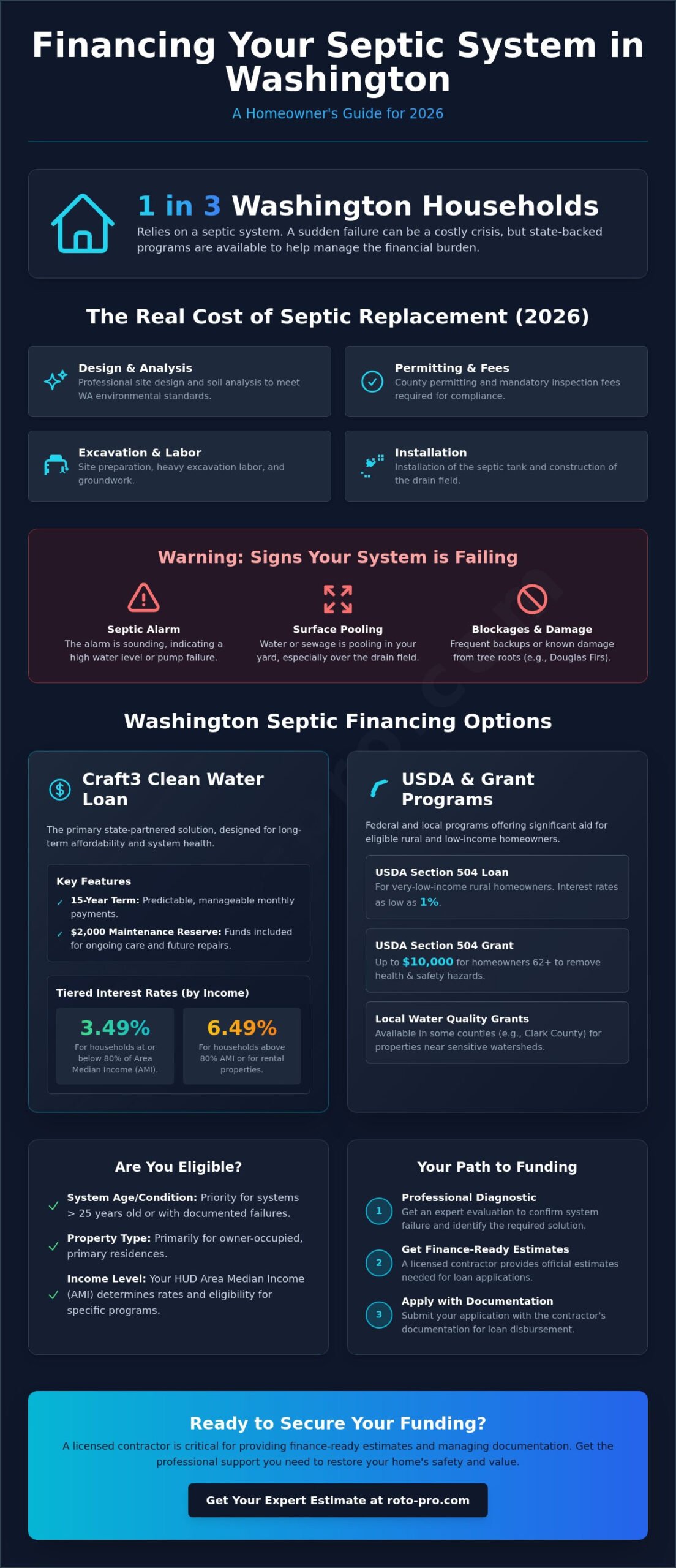
One out of every three households in Washington depends on a septic system to manage waste, yet a sudden failure often catches families without the liquid capital for a total replacement. Facing a health department order or a failing drain field is a significant burden that threatens both your home’s safety and its market value. Fortunately, securing financing for new septic system washington has become a structured process through state-backed public health initiatives. These programs recognize that a functioning system is a community necessity rather than just a private expense.
You don’t have to manage the costs of excavation and permitting alone. This guide details the most reliable funding paths for 2026, including the Craft3 Clean Water Loan with rates as low as 3.49% and USDA programs for rural residents. We’ll explain how to access these low-interest funds to cover your design, installation, and long-term maintenance. You’ll gain a clear roadmap to restore your property’s infrastructure while maintaining your financial stability. Whether you need a complete sewer line replacement or a new alternative system, the right strategy ensures your home remains safe and compliant.
Key Takeaways
- Analyze the breakdown of 2026 installation costs, including how Washington’s environmental regulations impact the scope of excavation and design.
- Compare the primary state-partnered programs and federal grants to find the most sustainable financing for new septic system washington residents.
- Learn the eligibility requirements for interest-free loans and emergency grants available specifically for low-income and rural homeowners.
- Understand the critical role of a licensed contractor in providing finance-ready estimates and managing the official documentation for loan disbursement.
The Real Cost of Septic Replacement in Washington (2026)
Homeowners in Clark County often find that a septic replacement is a multifaceted engineering project rather than a simple repair. The total investment involves several distinct phases that require specialized expertise:
- Professional site design and soil analysis
- County permitting and mandatory inspection fees
- Site preparation and heavy excavation labor
- Tank installation and drain field construction
These costs reflect the technical precision required to ensure waste is processed safely. If you’re seeking financing for new septic system washington, it’s essential to understand that these funds cover a comprehensive environmental solution. In Washington, the Department of Health and the Department of Ecology enforce rigorous standards to prevent groundwater contamination. Septic costs have risen in the Pacific Northwest due to environmental protection standards that require more advanced treatment technologies than previous decades.
Neglecting a failing system leads to expensive consequences beyond the mechanical repair. You may face local health department fines, soil saturation issues, and a sharp decline in property value. Modern Onsite sewage facilities (OSSF) are designed to protect the surrounding ecosystem, and a failure can lead to environmental remediation orders that far exceed the price of a standard installation.
Signs Your System is Failing and Needs Immediate Funding
Early detection is vital for your home’s safety. If your septic alarm sounds or you notice surface pooling in the yard, you’re likely facing a systemic failure. In the Vancouver area, the aggressive root systems of Douglas Fir trees frequently cause structural damage to tanks and pipes. If you suspect a blockage or structural breach, consult an expert sewer line repair in Clark county to determine if the issue is a localized pipe failure or a total system collapse.
Why Traditional Bank Loans Often Fall Short
Securing financing for new septic system washington through a traditional bank can be surprisingly difficult. Lenders often hesitate to fund “underground” assets because they can’t be easily appraised or repossessed. While home equity is a common path, it’s not always accessible for those who recently purchased their home or are dealing with a sudden emergency. This gap in traditional lending is why state-backed programs have become the preferred route for most Washington residents.
Comparison of Septic Financing Options in Washington
Washington homeowners have several specialized paths to secure financing for new septic system washington. The primary state-partnered solution is the Craft3 Clean Water Loan. This program offers a 15-year term with interest rates tiered by income levels. Households at or below 80% of the Area Median Income (AMI) can access a 3.49% rate; those above this threshold or owners of rental properties typically receive a 6.49% rate. Unlike private bank loans, this program includes a $2,000 reserve specifically for ongoing maintenance and system health.
The Regional On-Site Sewage System Loan Program (OSS) represents a critical collaboration between the Washington Department of Ecology and the Department of Health. While private financing options like Home Equity Lines of Credit (HELOC) offer faster funding speeds, they rarely match the 1% interest rates found in federal programs like the USDA Section 504 loan. Government-backed programs prioritize long-term environmental safety and property stability over immediate profit. If your system requires a technical evaluation before applying for these funds, a professional main line repair diagnostic can provide the necessary documentation for your lender.
Eligibility Requirements for Washington Clean Water Loans
Eligibility is frequently determined by the age and condition of the existing infrastructure. Systems older than 25 years or those with documented failures often receive priority for funding. The program primarily focuses on owner-occupied primary residences, though certain commercial and non-owner occupied properties may qualify under specific terms. Lenders use the HUD Area Median Income (AMI) to set your specific rate, ensuring that the financial burden remains manageable for households across different income brackets. The USDA Section 504 program is another vital avenue for financing for new septic system washington, particularly for very-low-income rural homeowners.
Alternative Funding: USDA and Local Grants
Low-income homeowners aged 62 or older may qualify for USDA Section 504 grants of up to $10,000. These funds are designed to eliminate health and safety hazards. In Clark County, additional water quality grants may be available through the health department for properties located near sensitive watersheds. These grants are often combined with low-interest loans to cover the full cost of a complex installation, ensuring the property meets modern environmental standards without exhausting the owner’s savings.
How to Coordinate Financing with Your Septic Contractor
Securing financing for new septic system washington requires a close partnership with a licensed general contractor. Lenders typically don’t disburse funds directly to homeowners; instead, they release payments to the professional overseeing the project. This structure ensures that the installation meets all state and local health department codes. A “finance-ready” estimate is the foundation of your application. It must detail the costs for soil analysis, system design, county permitting, and the physical installation to satisfy the lender’s underwriting requirements.
The most intensive portion of your budget involves heavy machinery and site work. In Clark County, the terrain often requires significant excavation to prepare the drain field and position the tank correctly. This phase demands technical precision to protect the structural integrity of your property. Roto Pro provides the detailed site work estimates required by lenders like Craft3. Having a comprehensive breakdown of these mechanical and labor costs speeds up the approval process and prevents unexpected out-of-pocket expenses during construction.
From Permit to Pumping: The Installation Timeline
The design and permitting phase in Southwest Washington can take several weeks depending on the county’s current backlog. It’s vital to coordinate your loan closing with the scheduled arrival of excavation equipment. If your current system is in active failure during this waiting period, you may need temporary mitigation. Contact an emergency plumber in Vancouver WA to manage immediate backups and protect your home’s interior while the new system permits are finalized.
Ensuring Long-Term Reliability Post-Installation
Modern Washington septic loans, such as the Craft3 program, often include a $2,000 maintenance reserve. This fund is a strategic tool designed to protect your new investment. Use this reserve to establish a rigorous maintenance schedule, which includes regular inspections and tank monitoring. To keep your new lines clear of debris and mineral buildup, consider professional hydro jetting in Vancouver WA as part of your long-term care plan. Proper maintenance prevents the premature failure of the drain field and ensures your financing for new septic system washington remains a sound investment for decades.
Restoring Your Home’s Infrastructure and Value
Replacing a failing septic system is a technical challenge that requires both financial strategy and engineering precision. You’ve seen that state-backed programs like Craft3 and federal USDA grants provide a viable path to protect your property without immediate financial strain. Success depends on coordinating these funds with a contractor who understands the specific excavation requirements of Washington’s soil and regulatory environment. Securing financing for new septic system washington is the first step toward long-term home safety and environmental compliance.
As a Licensed General Contractor in Washington, Roto Pro specializes in the heavy excavation and site work necessary for a successful installation. We understand the documentation lenders require and provide the detailed estimates needed to move your project forward. If you’re currently facing a system failure, our team provides 24/7 emergency support for Clark County homeowners to mitigate damage while your permanent solution is finalized. We prioritize technical accuracy and long-term stability in every project we undertake.
Contact Roto Pro for a Septic Replacement Estimate today to begin the process of restoring your home’s comfort and value. Your property’s health is in expert hands.
Frequently Asked Questions
Can I get septic financing in Washington with a low credit score?
You can often secure financing for new septic system washington even with a lower credit score through state-partnered lenders. Unlike private banks, programs like Craft3 prioritize the environmental necessity of the repair rather than strictly focusing on traditional credit metrics. They evaluate your application based on home equity and income stability. This approach ensures that public health isn’t compromised by a homeowner’s past financial challenges or limited access to traditional credit lines.
Does the Washington Clean Water Loan cover the cost of permits?
The Washington Clean Water Loan is designed to be all-inclusive, covering the costs of design, permitting, and the final installation. This comprehensive funding structure prevents homeowners from paying several thousand dollars in upfront administrative fees. Since the permit process in counties like Clark or King is a mandatory step for legal compliance, the loan ensures these regulatory costs are integrated into the long-term repayment plan without an immediate financial burden.
How long does it take to get approved for a septic loan?
Approval timelines generally range from two to four weeks, depending on the complexity of the application and the current volume of requests. Once you provide a finance-ready estimate from a licensed contractor, the lender reviews the technical scope and your financial eligibility. It’s helpful to have your property records and income documentation prepared in advance to avoid administrative delays. The process moves faster when your contractor provides precise site work and excavation data.
What happens if my septic system fails and I cannot afford to fix it?
If your system fails and you lack the funds for repair, you should immediately contact your local health department to explore emergency grant options. Washington residents may qualify for the USDA Section 504 program, which provides grants for seniors or 1% interest loans for very-low-income households. These resources exist to prevent property liens and health department orders. Financing for new septic system washington remains the primary tool to avoid these legal and environmental risks.