A septic riser is not a luxury; it’s a structural utility upgrade that typically pays for itself by your third routine service. Most homeowners find the process of locating and unearthing a buried septic lid both frustrating and expensive, especially when every pump-out involves landscape damage and specialized digging fees. If you’re tired of paying a premium just to access your own system, understanding the septic tank riser installation cost is the first step toward a more efficient property maintenance plan.
We believe that every technical problem deserves a permanent, high-quality solution rather than a temporary fix. You deserve a system that is easy to inspect and doesn’t require a shovel every few years. This article details the materials and professional standards required for a successful installation in 2026. We’ll examine the price differences between HDPE and fiberglass kits, explain how tank depth affects labor rates, and show how this investment protects your landscape from repeated excavation while ensuring long-term structural integrity.
Key Takeaways
- Transition from buried access to a grade-level utility port to ensure your system is always ready for inspection without damaging your yard.
- Evaluate the primary factors influencing the septic tank riser installation cost, such as tank depth and the selection of high-density polyethylene (HDPE) versus concrete components.
- Identify the technical risks of improper sealing, where even minor groundwater infiltration can lead to premature system failure and costly repairs.
- Realize long-term property maintenance savings by eliminating the labor-intensive excavation fees typically required for every routine pumping or inspection.
Understanding Septic Tank Risers: Why They Are a Necessary Investment
A septic riser serves as a vertical, watertight extension that connects your tank lid directly to the ground surface. Without this component, your septic tank remains buried, often several feet beneath the soil. This makes routine maintenance a significant logistical challenge. By bringing the access point to grade, you eliminate the need for heavy machinery or backbreaking manual labor just to find the lid. This accessibility is a primary reason why many local health departments and 2026 regulations now favor or even mandate riser installations during property transfers or system upgrades.
Beyond convenience, these systems provide a critical safety benefit through secure, bolt-down lids. These specialized covers are designed to withstand weight and prevent unauthorized access or accidental falls. When you consider the septic tank riser installation cost, you aren’t just paying for plastic or concrete; you’re investing in a permanent safety barrier that protects your family and pets from a hidden hazard in your backyard.
The ROI: Riser Cost vs. Repeated Excavation Fees
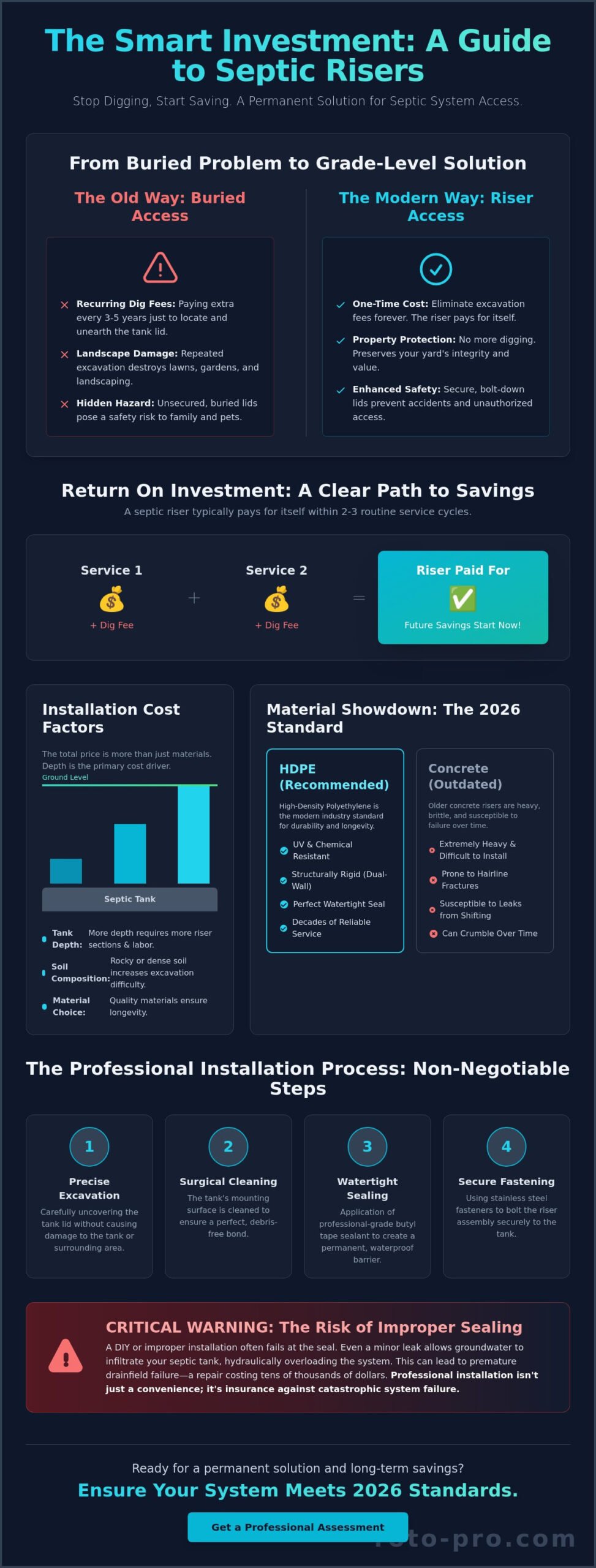
The initial septic tank riser installation cost is often viewed as an optional expense, but it’s actually a structural utility upgrade with a clear financial return. Most service providers charge a specific “dig fee” whenever a lid is buried more than 12 inches deep. These recurring costs add up quickly over the lifespan of your home. Typically, a riser pays for itself within just two to three maintenance cycles by removing these labor charges from your service invoice.
Risers also protect your property’s aesthetic and structural health. Repeated digging causes significant landscape damage and can expose the system to Douglas Fir root intrusion or accidental shovel strikes. By installing a permanent access port, you preserve your yard’s integrity and ensure that inspections are performed with technical precision. This proactive approach ensures your system remains compliant with modern standards while saving you hundreds of dollars in unnecessary excavation labor over the years.
Breaking Down the Septic Tank Riser Installation Cost Factors
While retail kits are widely available, the true septic tank riser installation cost involves more than just the price of a plastic tube. A professional installation accounts for the structural integrity of the entire access point. The total investment is influenced by the tank’s depth, the soil composition, and the quality of the sealing materials used to protect the system. In regions with dense or rocky soil, specialized excavation equipment is often required to reach the tank without compromising the concrete structure.
Depth is the most significant variable in these projects. As a tank sits deeper underground, the cost scales with the need for additional riser sections and increased labor for excavation. Precision is vital here. A technician must ensure the final lid sits exactly at grade to provide easy access while maintaining a clean look for your yard. Understanding how septic systems function highlights why this precise positioning matters; it allows for immediate inspection of the inlet and outlet baffles without disturbing the surrounding landscape.
Material Quality: Why HDPE is the Standard in 2026
In 2026, high-density polyethylene (HDPE) has replaced older concrete and PVC options as the industry standard. Unlike concrete risers, which are heavy and prone to hairline fractures over time, HDPE is UV-resistant and chemically inert. We prefer dual-wall construction because it provides the structural rigidity needed to withstand the lateral pressure of shifting soil. This material ensures the riser remains perfectly circular and watertight for decades, preventing the structural collapses often seen with inferior materials.
Labor Breakdown: What You Pay for in a Professional Install
A professional installation begins with carefully uncovering the tank and cleaning the mounting surface to a surgical standard. This step is non-negotiable. If the surface isn’t perfectly clean, the sealant won’t bond, leading to groundwater leaks. Often, expert sewer line repair in Clark County reveals that buried lids have led to neglected maintenance, making the addition of a riser a logical part of a larger system restoration. The process concludes with the application of professional-grade butyl tape and stainless steel fasteners to ensure the assembly remains airtight. If you’re planning a system upgrade, consider a professional assessment to ensure your main line repair or riser project meets these high technical standards.
Professional Installation vs. DIY: Ensuring a Watertight Seal
While the upfront septic tank riser installation cost might tempt some homeowners to attempt a DIY fix, the technical risks often outweigh the initial savings. The primary challenge isn’t the physical digging. It’s achieving a 100% watertight seal at the tank-to-riser junction. If this connection fails, groundwater infiltrates the system. This extra volume forces the tank to process clean rainwater as sewage, which quickly saturates the drain field and leads to premature hydraulic failure. Professional installation ensures that the adapter is properly seated, often requiring specialized tools to grind aged concrete surfaces for a flush, airtight fit.
Beyond the seal, a licensed contractor ensures your system remains code-compliant. In 2026, property transfers in Washington often require a rigorous inspection of septic components. A poorly installed, non-permitted riser can stall a home sale or result in mandated corrective repairs. Professionals use diamond-blade saws and high-torque fasteners to secure the assembly, providing a structural integrity that a standard homeowner tool kit cannot replicate.
The PNW Factor: Managing Surface Water in Vancouver and Longview
In our region, the weather plays a decisive role in system longevity. Heavy Washington rains can easily flood a poorly sealed riser, turning a simple maintenance upgrade into a plumbing emergency. We finish every installation at the precise grade level to ensure water sheds away from the opening. This prevents water pooling and protects the lid from mower damage, as a lid that sits even an inch too high is a constant strike hazard during routine yard work.
Why Roto Pro is the Choice for Septic Site Work
Roto Pro brings deep excavation expertise and technical precision to every septic project. We understand that a riser is a gateway to your system’s health. Many homeowners choose to bundle their installation with hydro jetting in Vancouver, WA to ensure the entire main line is clear before the new access port is sealed. This comprehensive approach provides the long-term security and home comfort our clients expect, backed by 24/7 support for any unforeseen system failures.
Secure Your Property with Professional Septic Access
Investing in a high-quality riser system transforms your septic maintenance from a recurring excavation project into a simple, grade-level inspection. By eliminating the manual labor and landscape damage associated with finding buried lids, you ensure your system is always accessible for routine service or emergency repairs. While the initial septic tank riser installation cost represents a structural commitment, it provides a permanent solution that protects your drain field from groundwater infiltration and preserves your yard’s aesthetic integrity.
As a Licensed General Contractor in Washington, we specialize in expert excavation and site work tailored to the unique soil conditions of the Pacific Northwest. Our technical approach ensures every component is seated with precision and sealed against the heavy rains typical of Vancouver and Longview. If you’re ready to modernize your system’s access, Get a Professional Quote for Your Septic Riser Installation. We stand by our work with 24/7 emergency septic support, ensuring your home remains comfortable and your utility systems remain compliant for years to come. Your property deserves the stability of a professionally managed infrastructure.
Frequently Asked Questions
How much does a septic riser kit cost vs. professional installation?
A standard septic riser kit typically costs between $100 and $300 depending on the diameter and material. Professional installation generally ranges from $300 to $600 per riser, which includes the specialized labor, excavation, and professional-grade sealing materials. While the initial septic tank riser installation cost is higher for professional service, it ensures the structural integrity and watertight performance that a basic retail kit cannot guarantee on its own.
Can I install a septic tank riser myself to save money?
You can install a riser yourself if you are comfortable with manual excavation and have the technical skill to apply a watertight seal. However, the most frequent DIY error is a failure to properly bond the adapter to the concrete tank. This allows groundwater to leak into the system, which can overfill your tank and lead to a premature drain field failure. For tanks buried deeper than 24 inches, professional equipment is usually required for a safe installation.
Will a septic riser prevent Douglas Fir roots from entering my tank?
A high-quality riser with a professional butyl seal significantly reduces the risk of root intrusion at the tank’s access point. Many older systems have loose-fitting concrete lids that allow Douglas Fir roots to penetrate the system easily. By replacing these with high-density polyethylene (HDPE) risers and bolt-down lids, you create a durable barrier that protects the tank’s interior. This is a critical step for maintaining system health in heavily wooded areas like Clark County.
Does a septic riser need to be at ground level or can it be buried slightly?
A septic riser is most effective when installed exactly at ground level. The primary goal of the installation is to eliminate the need for digging during future maintenance or inspections. While some homeowners prefer to hide the lid under two inches of mulch, keeping it at the surface ensures the lid is easy to locate and prevents surface water from pooling over the seal. A grade-level finish also protects the lid from accidental damage by lawn mowers.
How do I know what size riser kit I need for my tank?
The most common diameter for residential septic risers is 24 inches, though some older tanks may require 20-inch kits. You must measure the clear opening of your tank’s access hole to ensure a proper fit for the adapter ring. Additionally, you need to measure the vertical distance from the top of the tank to the ground surface. If your tank is buried more than 18 inches deep, you’ll need to stack multiple riser sections to reach the required height.